Feng Chun Ma
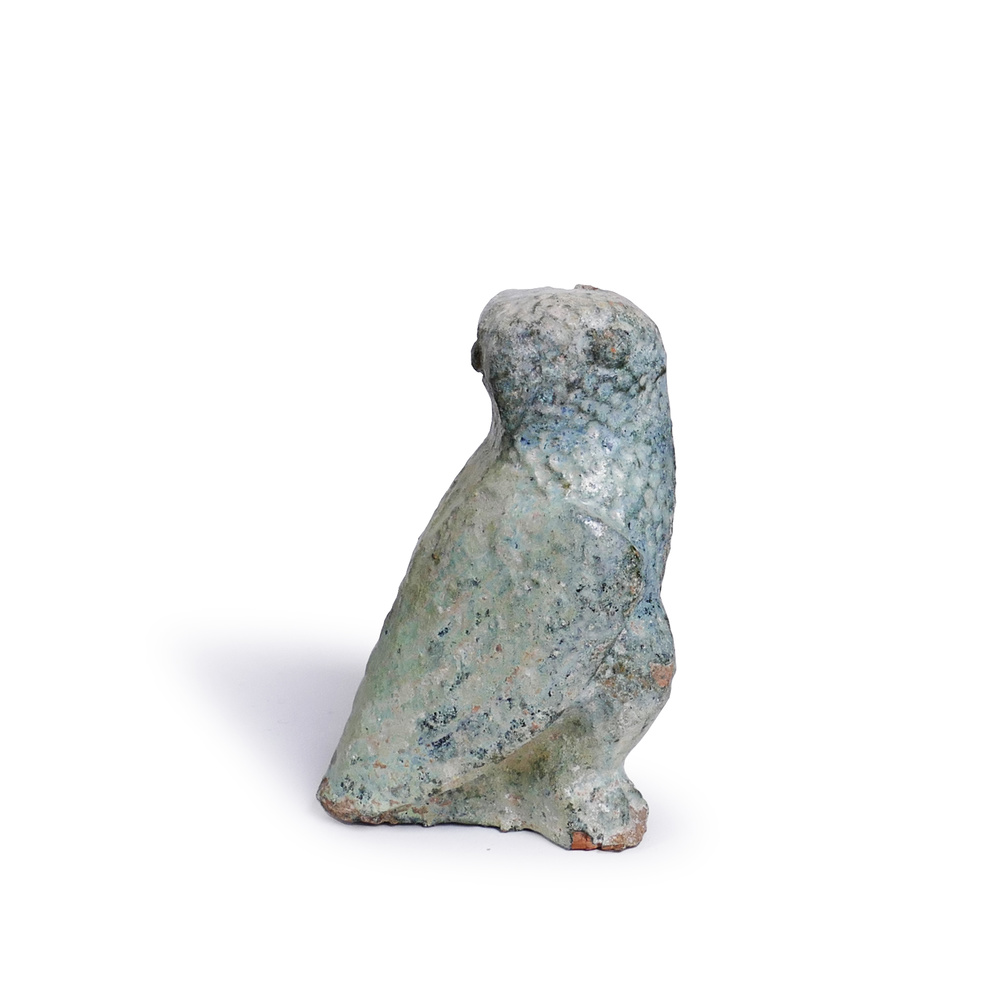
  • EHU 14 han dynasty green glazed bird
Feng Chun Ma
Address:
Weerdestein 182 ,
1083 GM Amsterdam
Region: Noord-Holland
Country: The-Netherlands
Tel.: +31 (0)20 420 82 48
E-mail: fcma@fengchunma.com
Website: www.fengchunma.com
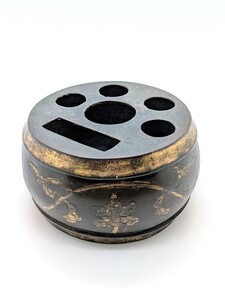
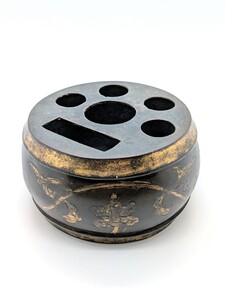
WF 25 A rare gilt bronze brush- and ink stick holder<br><br>明早期 珍罕銅鎏金鼓式筆墨插

WF 25 A rare gilt bronze brush- and ink stick holder

明早期 珍罕銅鎏金鼓式筆墨插

Early Ming dynasty, 16th century

The top of the compressed drum-shaped holder is pierced with four circular and one rectangular apertures for holding brushes and an inkstick.
The curved sides are decorated with lotus heads issuing from a leafy scroll between wide bands, all picked out in gilt
Diameter 11.5 cm

Provenance:  The Sam Marsh collection
                      Nicholas Grindley, London
                      Christie's Hong Kong, 31 March-1 April 1992, Lot 986

Published: Sam Marsh, 'Brushpots, A Collector's View', Hong Kong 2020

Drum-shaped brush- and inkstick holders were produced in Chinese porcelain for a relatively short period and are generally dated to the first half of the 16th century.
They usually have three or four circular and one rectangular aperture at the top for holding brushes and an inkstick.
Ming blue-and-white and the 'fahua' type are known (See, for example, images 4-5 from our collection and our website No. PF 49).

It's very rare to find similar objects made of materials other than porcelain, such as our bronze example, which probably predate the Ming porcelain ones.
Image 5 shows a series of examples from the Sam Marsh collection, including our bronze one.

The use of these brush- and inkstick receptacles becomes clear as there exists a painting of the famous philosopher Wang Yangming (1472-1529) seated at his writing desk. On the desk we can see, amongst others, a similar vessel, the circular holes holding three brushes with tips upwards (see images 5-6). It is assumed that the rectangular opening is meant to hold an inkstick. (See G. Tsang and H. Moss, 'Arts from the Scholar's Studio', Hong Kong. 1986, pp. 226-227).

This very piece was formerly in the collection of Sam Marsh (provenance Nicholas Grindley), and illustrated in his latest publication, Brushpots, A Collector's View, Hong Kong 2020, p.24, fig.5


WF 25 明早期 珍罕銅鎏金鼓式筆墨插

明早期,十六世紀

器呈扁鼓式,頂部開四圓孔與一方孔,用以插置毛筆與墨錠。
弧形腹部飾兩道寬弦紋,其間飾以卷草蓮紋,整體紋飾皆以鎏金工藝彰顯。

直徑 11.5 公分

來源:墨一閑(Sam Marsh)收藏
Nicholas Grindley, 倫敦
香港佳士得, 1992年3月31至4月1日, 拍品986

出版:Sam Marsh, Brushpots, A Collector's View, Hong Kong 2020, 頁24, 圖5


​                    

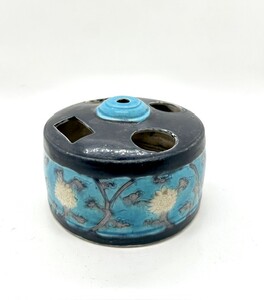
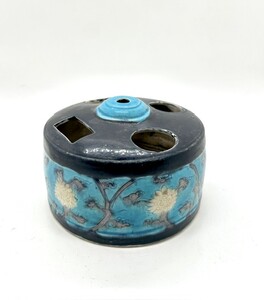
PF 49 A rare 'fahua' drum-form brush and inkstick holder<br><br>明 珍罕法華彩鼓式筆墨插

PF 49 A rare 'fahua' drum-form brush and inkstick holder

明 珍罕法華彩鼓式筆墨插

Ming dynasty, first half of the 16th century

The slightly rounded sides are incised on the turquoise-blue ground with aubergine lotus scrolls and blossoms glazed in cream. The top is glazed in dark violet-blue and has three circular and one rectangular aperture encircling a turquoise central raised disc with a small circular hole. 
The base is partly glazed in a yellowish colour.
Diameter 13 cm

Drum-shaped brush- and inkstick holders were produced in China during a rather short period, and generally dated to the first half of the 16th century, although blue and white examples from the Wanli period (1573-1620) are known.
They usually have three or four circular and one rectangular openings at the top for holding brushes and an inkstick.

A similar fahua example incised with a four-character Ming mark, from the Percival David collection, is in the Victoria & Albert Museum (C 58-1935).
Another example, but missing the central domed disc, from the Sam Marsh collection, is illustrated in his latest publication, together with other drum-shaped brush receptacles, in 'Brushpots, A Collector's View', Hong Kong 2020 (see image 9).

The use of these brush- and inkstick receptacles becomes clear as there exists a painting of the famous philosopher Wang Yangming (1472-1529) seated at his writing desk. On the desk we can see, amongst others, a similar vessel, the circular holes holding three brushes with tips upwards (see images 5-6). It is assumed that the rectangular opening is meant to hold an inkstick. (See G. Tsang and H. Moss, 'Arts from the Scholar's Studio', Hong Kong. 1986, pp. 226-227).

It is very rare to find similar shapes made of materials other than porcelain, such as the gilt bronze example from our collection (see images 7-9), which probably predate the Ming porcelain ones.


PF 49 明 珍罕法華彩鼓式筆墨插

明朝,十六世紀上半

腹部微鼓,孔雀藍釉地上刻劃繾綣的茄皮紫蔓草蓮花紋,花瓣施以米白釉。頂部施靛藍釉,設有三圓孔與一方孔,環繞著中央隆起的孔雀藍圓形插孔。
器底局部施黃釉。

直徑 13 公分


倫敦大維德基金會(Percival David Collection)曾藏有一件類似的法華器,器身刻有明代四字款,現存於維多利亞與阿爾伯特博物館(Victoria & Albert Museum,館藏編號 C 58-1935)。

另一件出自墨一閑(Sam Marsh)的珍藏,其中心隆起的插孔已失,該器與其他鼓式筆插一同收錄於其最新著作: Brushpots, A Collector's View, Hong Kong, 2020 (見圖9)


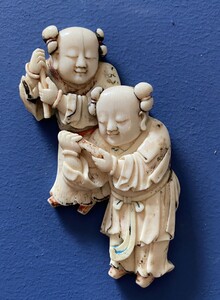
WF 79 A stained ivory 'Boys' appliqué panel<br><br>十八世紀 染色象牙貼飾板

WF 79 A stained ivory 'Boys' appliqué panel

十八世紀 染色象牙貼飾板

18th century 

The appliqué is finely carved in the form of two boys, each holding an implement, probably a musical instrument. They are dressed in loose fitting robes fastened with a sash, their hair bound in two double knots, and showing traces of red, green and black colour.
Length 8.7 cm

Provenance: Collection of Feng-Chun Ma
Illustrated in: Feng-Chun Ma, A Thousand Years of Hundred Boys in Chinese Art, 10th-20th century, Hong Kong 2024, No. 79, p.197

Figurative appliqués of this type were originally affixed to screens and were made from a variety of materials.
They are particularly finely carved, representing the heyday of the carver's art in the 18th century. 
Similar examples are said to come from the Summer Palace, as screens and panels carved in relief were used as wall decoration in the interior of various Imperial residences. Few have survived as independent works of art.
See for similar appliqués: Ivories of China and the East, Spink & Son Ltd., 1984, gig. 30/31, and Chinese Ivories from the Shang to the Qing, The Oriental Ceramic Society and the British Museum, 1984, p. 148, figs. 165, 166 and 167


WF 79 十八世紀 染色象牙貼飾板

此件貼飾板以象牙精雕而成,呈雙童子形象。二童各持一器物,應為樂器。人物身著寬鬆長袍,以束帶繫腰,梳雙髻。表面尚殘留紅、綠、黑三色彩繪痕跡。

長 8.7 公分

來源:馬鳳春 珍藏

出版:馬鳳春《千年百子:十至二十世紀中國藝術中的嬰戲圖》, Hong Kong, 2024, no. 79, 頁197


此類人物貼飾原為裝飾於屏風之上的附加構件,製作材質多樣,包括象牙、木、竹等。與本件相類似之作品,據悉多出自圓明園。作為獨立藝術品保存至今者,極為罕見。


WF 25 A rare gilt bronze brush- and ink stick holder<br><br>明早期 珍罕銅鎏金鼓式筆墨插

WF 25 A rare gilt bronze brush- and ink stick holder

明早期 珍罕銅鎏金鼓式筆墨插

Early Ming dynasty, 16th century

The top of the compressed drum-shaped holder is pierced with four circular and one rectangular apertures for holding brushes and an inkstick.
The curved sides are decorated with lotus heads issuing from a leafy scroll between wide bands, all picked out in gilt
Diameter 11.5 cm

Provenance:  The Sam Marsh collection
                      Nicholas Grindley, London
                      Christie's Hong Kong, 31 March-1 April 1992, Lot 986

Published: Sam Marsh, 'Brushpots, A Collector's View', Hong Kong 2020

Drum-shaped brush- and inkstick holders were produced in Chinese porcelain for a relatively short period and are generally dated to the first half of the 16th century.
They usually have three or four circular and one rectangular aperture at the top for holding brushes and an inkstick.
Ming blue-and-white and the 'fahua' type are known (See, for example, images 4-5 from our collection and our website No. PF 49).

It's very rare to find similar objects made of materials other than porcelain, such as our bronze example, which probably predate the Ming porcelain ones.
Image 5 shows a series of examples from the Sam Marsh collection, including our bronze one.

The use of these brush- and inkstick receptacles becomes clear as there exists a painting of the famous philosopher Wang Yangming (1472-1529) seated at his writing desk. On the desk we can see, amongst others, a similar vessel, the circular holes holding three brushes with tips upwards (see images 5-6). It is assumed that the rectangular opening is meant to hold an inkstick. (See G. Tsang and H. Moss, 'Arts from the Scholar's Studio', Hong Kong. 1986, pp. 226-227).

This very piece was formerly in the collection of Sam Marsh (provenance Nicholas Grindley), and illustrated in his latest publication, Brushpots, A Collector's View, Hong Kong 2020, p.24, fig.5


WF 25 明早期 珍罕銅鎏金鼓式筆墨插

明早期,十六世紀

器呈扁鼓式,頂部開四圓孔與一方孔,用以插置毛筆與墨錠。
弧形腹部飾兩道寬弦紋,其間飾以卷草蓮紋,整體紋飾皆以鎏金工藝彰顯。

直徑 11.5 公分

來源:墨一閑(Sam Marsh)收藏
Nicholas Grindley, 倫敦
香港佳士得, 1992年3月31至4月1日, 拍品986

出版:Sam Marsh, Brushpots, A Collector's View, Hong Kong 2020, 頁24, 圖5


​                    

PF 49 A rare 'fahua' drum-form brush and inkstick holder<br><br>明 珍罕法華彩鼓式筆墨插

PF 49 A rare 'fahua' drum-form brush and inkstick holder

明 珍罕法華彩鼓式筆墨插

Ming dynasty, first half of the 16th century

The slightly rounded sides are incised on the turquoise-blue ground with aubergine lotus scrolls and blossoms glazed in cream. The top is glazed in dark violet-blue and has three circular and one rectangular aperture encircling a turquoise central raised disc with a small circular hole. 
The base is partly glazed in a yellowish colour.
Diameter 13 cm

Drum-shaped brush- and inkstick holders were produced in China during a rather short period, and generally dated to the first half of the 16th century, although blue and white examples from the Wanli period (1573-1620) are known.
They usually have three or four circular and one rectangular openings at the top for holding brushes and an inkstick.

A similar fahua example incised with a four-character Ming mark, from the Percival David collection, is in the Victoria & Albert Museum (C 58-1935).
Another example, but missing the central domed disc, from the Sam Marsh collection, is illustrated in his latest publication, together with other drum-shaped brush receptacles, in 'Brushpots, A Collector's View', Hong Kong 2020 (see image 9).

The use of these brush- and inkstick receptacles becomes clear as there exists a painting of the famous philosopher Wang Yangming (1472-1529) seated at his writing desk. On the desk we can see, amongst others, a similar vessel, the circular holes holding three brushes with tips upwards (see images 5-6). It is assumed that the rectangular opening is meant to hold an inkstick. (See G. Tsang and H. Moss, 'Arts from the Scholar's Studio', Hong Kong. 1986, pp. 226-227).

It is very rare to find similar shapes made of materials other than porcelain, such as the gilt bronze example from our collection (see images 7-9), which probably predate the Ming porcelain ones.


PF 49 明 珍罕法華彩鼓式筆墨插

明朝,十六世紀上半

腹部微鼓,孔雀藍釉地上刻劃繾綣的茄皮紫蔓草蓮花紋,花瓣施以米白釉。頂部施靛藍釉,設有三圓孔與一方孔,環繞著中央隆起的孔雀藍圓形插孔。
器底局部施黃釉。

直徑 13 公分


倫敦大維德基金會(Percival David Collection)曾藏有一件類似的法華器,器身刻有明代四字款,現存於維多利亞與阿爾伯特博物館(Victoria & Albert Museum,館藏編號 C 58-1935)。

另一件出自墨一閑(Sam Marsh)的珍藏,其中心隆起的插孔已失,該器與其他鼓式筆插一同收錄於其最新著作: Brushpots, A Collector's View, Hong Kong, 2020 (見圖9)


BF 81 A small blue and white rouleau vase<br><br>明崇禎至清順治 哈察船貨 青花清供小棒槌瓶

BF 81 A small blue and white rouleau vase

明崇禎至清順治 哈察船貨 青花清供小棒槌瓶

Chongzhen-Shunzhi, c. 1640-1645

The vase is of cylindrical form and is surmounted by a waisted neck.
The exterior is painted in shades of underglaze blue with two large vases, one filled with flowering branches of lotus beside a low table supporting an incense burner and a tool vase. The other vase is filled with flowering branches of prunus beside a jardiniere containing a small scholar's rock, and a bowl filled with fruit. An insect is hovering above, all under a full  moon. 
Height 20.6 cm

This vase was amongst the circa 25.000 pieces of porcelain salvaged from the South China Sea by Captain Michael Hatcher from a wrecked Chinese junk.
Sold at Christie's Amsterdam, June 1984 (Label)

Illustrated: Feng-Chun Ma, 'Chinese Porcelain from the Wanli to Kangxi Period', 2019, Catalogue, No.44


明崇禎至清順治 哈察船貨 青花清供小棒槌瓶

c. 1640-1645

器呈筒式,束頸。外壁以青花繪兩件大瓶:一瓶內插折枝蓮花,旁設矮几,几上承香爐與香具;另一瓶內插折枝梅花,旁置賞石盆景及一盛放瑞果之盌。上方高懸一輪圓月,並繪草蟲翩躚其間。

高20.6公分

來源:此瓶為哈察船貨之一。
1984年6月 阿姆斯特丹佳士得(標籤)

圖錄: 馬鳳春, 'Chinese Porcelain from the Wanli to Kangxi Period', 2019, Catalogue, No.44


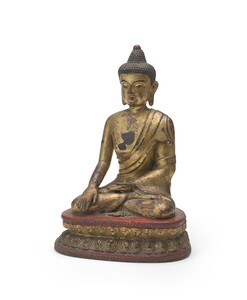
WF 21 A gilt and lacquered bronze figure of Shakyamuni Buddha<br><br>明十六世紀 銅鎏金髹漆釋迦牟尼佛坐像

WF 21 A gilt and lacquered bronze figure of Shakyamuni Buddha

明十六世紀 銅鎏金髹漆釋迦牟尼佛坐像

Ming dynasty, 16th century

The Buddha is shown seated in dhyanasanahis right hand pointing to the earth in bhumisparsamudra on a double-lotus pedestal, and left hand resting on his lap in dhyana mudra. He is wearing priest's robes draped over the left shoulder. The face is finely cast with contemplative expression flanked by long pendulous pierced ear lobes, below tightly-coiled black curls,  surmounted by a bud-shaped usnisa.
Painted black and red details of face and usnisa
Height 24.5 cm

Provenance: An old private collection, Sweden
                     Remains of old Chinese stickers on the back

Some stylistic features of this Buddha, such as the tall, poited usnisa, and the elongated pendulous ear lobes shows an evident influence of the Central Tibetan style. Such Tibetan characteristics of Buddha were introduced to China during the Yuan dynasty (1279-1368), when the Tibetan form of esoteric Buddhism was adopted as the official religion of the Mongol court.


WF 21 明十六世紀 銅鎏金髹漆釋迦牟尼佛坐像

本尊釋迦牟尼佛結跏趺坐於雙層蓮瓣座之上。右手下垂施觸地印,左手平放於盤築的雙腿上結禪定印。身著袈裟,偏袒右肩。佛面法相尊崇,鑄造精工,呈靜穆沉思之態;雙耳下垂且耳璫穿孔。頭飾緊密螺髪,肉髻高聳呈苞蕾狀。面部及肉髻局部可見黑、紅兩色漆繪細節。

高24.5公分

來源:瑞典私人舊藏。背面留有中國舊標籤殘痕


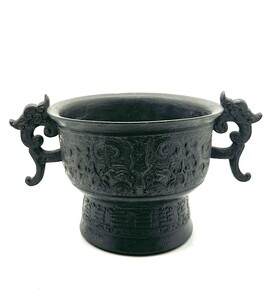
WF 49 A Bronze Censer<br><br>十七/十八世紀 青銅香爐

WF 49 A Bronze Censer

十七/十八世紀 青銅香爐

17th/18th century 

The incense burner is cast on the steeply rounded sides with a large taotie mask on a leiwen ground. It is supported by a tall splayed foot cast on both sides with a border of the eight trigrams, bagua, below a scroll border. The sides are flanked by two dragon-fish handles, each 'biting'  the everted rim. The base is cast with a geometric diaper pattern.

Width (from handle to handle) 24.5 cm


WF 49 十七/十八世紀 青銅香爐

本品青銅爐深腹弧壁,外壁通體以雷紋為地,鑄飾碩大饕餮紋。下承高圈足,向外微撇,圈足周身鑄八卦紋一周,其上飾卷草紋邊飾。器身兩側對稱置雙魚龍耳,龍首作吞銜外撇爐沿狀。器底鑄幾何錦紋。

雙耳距24.5公分


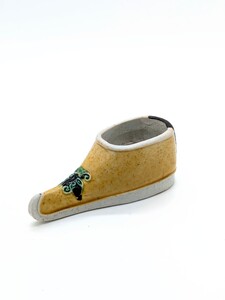
PF 52 A famille verte biscuit model of a lady’s shoe<br><br>清康熙 素三彩繡花鞋型筆洗

PF 52 A famille verte biscuit model of a lady’s shoe

清康熙 素三彩繡花鞋型筆洗

Kangxi (1662-1722)

The lady's shoe is in the shape of an early Ming satin model with an embroidered top, and a piece of damask is attached to the heel (see a pair of shoes found in an early Ming lady's tomb).
It is glazed in yellow and enamels, details in relief of a stylised animal's mask in green and aubergine. 
Length 9.5 cm

This so-called' lotus' shoe was meant for a lady's bound foot.
In traditional China, especially during the Song (960-1279) throughout the Qing (1644-1912) dynasties, the bound feet were considered the most intimate and erotic part of a woman's body, symbols of feminine beauty, elegance and sexuality. Therefore, small-sized shoes were deeply intertwined with sexuality, eroticism, and patriarchal perceptions of femininity.


PF 52 清康熙 素三彩繡花鞋型筆洗

此品造形取法明早期緞面繡花鞋,鞋面飾以刺繡紋樣,後跟處見綾緞紋(參考明代早期女性墓葬出土之鞋履實物)。通體施琺瑯黃釉,鞋頭處浮雕蛾紋,施綠、紫色釉。

長9.5公分


BFE 28 Two blue and white Ko-Sometsuke dishes<br><br>明天啟至崇禎 青花荷塘古染付方盤 兩件

BFE 28 Two blue and white Ko-Sometsuke dishes

明天啟至崇禎 青花荷塘古染付方盤 兩件

Tianqi -Chongzhen period (c. 1625-1635)

The sturdily potted dishes are of square form with flattened rim with indented corners. The interior of each is painted in shades of underglaze-blue to the centre with large flowering lotus branches growing from a pond. A turtle is emerging from a lotus leaf in the lower left corner; a winged insect is hovering above. The rims are reserve-decorated in white with a border of scrolling chrysanthemum.
17.5 and 17.8 cm wide

Provenance:
Formerly in a Japanese collection
Acquired from Jorge Welsh, London

The scene of the present dish is painted after a Chinese woodblock print from the Bazhu Huapu, 'Manual of Eight Types of Paintings', dating from the Tianqi period (1621-1627). In the original print, a frog is shown on the lotus leaf, which is replaced by a turtle in our dishes.


明天啟至崇禎 青花荷塘古染付方盤 兩件

c. 1625-1635

器胎堅實,呈倭角折沿方盤式。盤心以青花繪荷塘景致,蓮花自水中挺立;左下角一烏龜自荷葉間探出,上方繪草蟲翩躚。折沿處飾纏枝菊紋一週。
此盤紋飾取材自明天啟年間刊行之木刻版畫《八種畫譜》。原版畫中荷葉上繪有一青蛙,而本品則將其替換為烏龜。

寬 17.5 及 17.8 公分

來源:日本舊藏
倫敦 Jorge Welsh


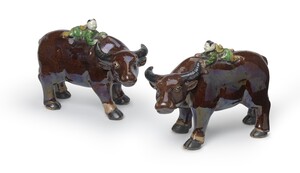
PF 30 A Pair Of Famille-Verte Biscuit Figures Of A Boy On A Buffalo<br><br>清康熙 素三彩牧童臥牛 一對

PF 30 A Pair Of Famille-Verte Biscuit Figures Of A Boy On A Buffalo

清康熙 素三彩牧童臥牛 一對

Kangxi period (1662-1722)

Each is modelled in mirror image in the form of a boy lying on the back of a buffalo. Each animal, standing four-square looking to the right or to the left, is realistically depicted and glazed in a strong aubergine colour, the hooves dark brown below a narrow unglazed band. Each boy lies on his front, holding a ruyi scepter in one hand, his straw hat on his back.
Each is wearing a green tunic over yellow trousers, the smiling face in biscuit under black hair.

Length: 19.5 cm; height: 13.5 cm

Provenance: Feng-Chun Ma, Amsterdam

Published in Feng-Chun Ma, A Thousand Years of Hundred Boys in Chinese Art, 10th–20th Century (Hong Kong: CA Book Publishing, 2024), 108.

The herd-boy and the buffalo are depicted in a relaxed mood after their work is finished, ready to return home.


PF 30 清康熙 素三彩牧童臥牛 一對

水牛四足穩立,或向右或向左顧盼,造型寫實,通體施濃郁茄紫釉,蹄部呈深褐色,蹄上留一圈素胎。童子俯臥其上,一手持如意,草帽置於背後。童子身著綠色上衣與黃色長褲,面容含笑,以素胎呈現膚色,配以黑髮。
牧童與水牛神情閒適,正準備歸返家園。

長:19.5 公分;高:13.5 公分

來源:Feng-Chun Ma, Amsterdam

出版:馬鳳春《千年百子─十至二十世紀中國藝術中的嬰戲圖》(香港:CA Book Publishing, 2024),頁108.

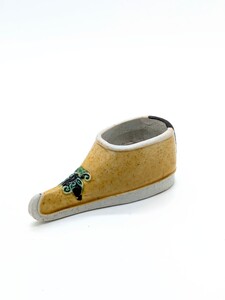
PF 52 A famille verte biscuit model of a lady’s shoe<br><br>清康熙 素三彩繡花鞋型筆洗

PF 52 A famille verte biscuit model of a lady’s shoe

清康熙 素三彩繡花鞋型筆洗

Kangxi (1662-1722)

The lady's shoe is in the shape of an early Ming satin model with an embroidered top, and a piece of damask is attached to the heel (see a pair of shoes found in an early Ming lady's tomb).
It is glazed in yellow and enamels, details in relief of a stylised animal's mask in green and aubergine. 
Length 9.5 cm

This so-called' lotus' shoe was meant for a lady's bound foot.
In traditional China, especially during the Song (960-1279) throughout the Qing (1644-1912) dynasties, the bound feet were considered the most intimate and erotic part of a woman's body, symbols of feminine beauty, elegance and sexuality. Therefore, small-sized shoes were deeply intertwined with sexuality, eroticism, and patriarchal perceptions of femininity.


PF 52 清康熙 素三彩繡花鞋型筆洗

此品造形取法明早期緞面繡花鞋,鞋面飾以刺繡紋樣,後跟處見綾緞紋(參考明代早期女性墓葬出土之鞋履實物)。通體施琺瑯黃釉,鞋頭處浮雕蛾紋,施綠、紫色釉。

長9.5公分